Unlucky

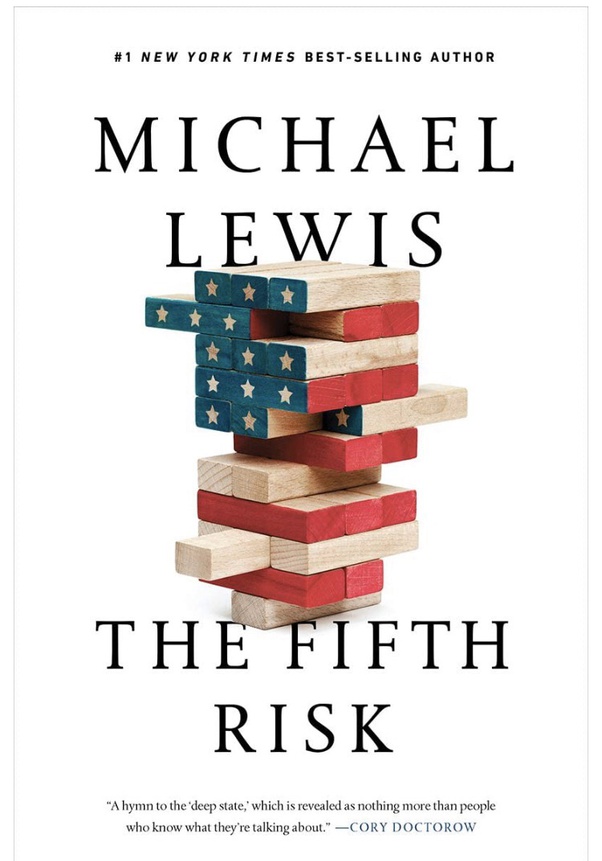
There is a book that does not get the recognition it deserves…

It predicted Trump and his team’s downfall, due to his complete lack of interest in the job of government. That they would cause serious damage to the United States, and possibly the world, due to apathy.

Due to a lack of humility.

Due to a lack of competence.

Due to a lack of understanding.

Due to a lack of curiosity.

Due to a lack of history.

Due to a lack of education.

Due to a lack of care.

Due to a lack of preparation.

Due to a lack of vision.

Due to a lack of imagination.

Due to a lack of faith in others.

And not in any way whatsoever due to a lack of luck.

It did not have to be this way. “Some people just want to see the world burn.”

Enjoying the flames?

(This originally appeared on Quora in response to: Is President Trump the most unlucky president of all time?)

The Deep State

Do you know what “failed” nation states all have in common?

Weak institutions.

A Supreme Court that cares more about political allegiances than the law or what’s right or wrong.

A high level police force that can be manipulated, or dismissed, when those in power find it convenient to do so.

A press that cannot get access, or answers to basic questions, unless they turn into propaganda mouthpieces with no critical thought allowed.

Scientific advisors, and agencies, who are contradicted, see their advice ignored, or even suggested that they are falsifying data because it is expedient to do so.

No protection for whistleblowers, or those who contradict the regime.

The pardoning of criminals because they are friends, or fixers, and the persecution of those who would dare to cross those more powerful.

The gifting of contracts to friends and friendly causes, and the sacking of the public purse.

Second chambers of elected officials who forget that their responsibility is to those who elected them, not to the people they are supposed to be holding accountable.

Any of this sound familiar?

The “Deep State” is people who have chosen to serve their country and believe in institutions are important. They are highly competent, professionals, who believe the work they do matters. That it is important. And that loyalty to the people is more important than any one “leader.”

(An answer, originally on Quora, to the question: “Does the “deep state” that Trump and many conservatives believe opposes his presidency actually exist? Isn’t it just part of his Administration? What specific actions does Trump accuse this “deep state” of taking against him?” Original post here. )

What Made Battlestar Galactica so Important?

This is a complex question, with way more than one correct answer.

As has already been mentioned, it was made in the aftermath of 9/11, and in particular the American reaction to 9/11. It is hard to not see almost all of it as an allegorical tale of the Bush years.

It was not afraid of very difficult subjects.

It is hard to think of another TV show that made a sympathetic argument for suicide bombers.

It dealt with military overreach, torture, and war crimes; while still acknowledging the need, and respect for the military and the people who embraced it as a way of life.

It dealt with genocide, compromise with the enemy, religion, the abuse of religion, suicide, drug and alcohol abuse, and fate.

Workers rights, the rights of succession, and political system were all dealt with in depth with an intelligence rarely seen on television and never seen on a science fiction show.

On the production side it embraced a much grittier type of science fiction. There were no lasers, aliens, or “heroes.” The characters were all flawed, they committed crimes, they were selfish, and could be wrong for the right reasons and right for the wrong ones.

BSG was also a flagship show for a very poorly thought of network – Sci-Fi as it was then called. It brought the network a lot of credibility in the shape of reviews and awards. People who would have never watched the Sci-Fi Channel tuned in every week. There probably would not have been a Walking Dead, or even the current form of AMC if it were not for Battlestar Galactica.

In addition, and remember this is before twitter and Facebook became mainstream, the show makers – in particular Ronald D. Moore – embraced communicating with their audience. Ron Moore posted a Podcast commentary for all the episodes of the latter seasons. They also developed two webisode series which lead directly to the Hollywood Writers strike which almost torpedoed the final season of BSG. They were also okay with poking fun at themselves – the “What the Frak” series recaps pointed out the flaws in the show but it did not matter.

Finally, the show was just well made. It was very well written and directed. Many of the writers finished on BSG and moved on to Game of Thrones (it is hard to imagine GOT getting green lit without BSG). When Lost had literally lost its way, BSG had the same writers room freedom but was coherent and cohesive.

Battlestar Galactica ignored the usual tropes and talked about what mattered to people at the time. It showed what television could be.

(This originally appeared on Quora as an answer to: What made Battlestar Galactica such an important television series?)

Do You Still Go To Concerts?

Yes.

In Las Vegas.

Why?

Because.

Fuck.

Him!

How dare he do that to our town.

How dare he attack people who live here, who visited here, and people who just wanted to have a fun evening out.

How dare he use our town and then abuse it in the worst way.

I went to Life is Beautiful, a huge outdoor festival in Downtown Las Vegas about 10 months after the shooting. There was a tangible police presence during the festival. Police on every rooftop. Police on patrol, police in golf carts.

And guess what?

Everyone had a great, safe time.

So fuck him. We will not let him damage our town and the people who visit to have good time.

This originally appeared on Quora in answer to: Since the shooting at Mandalay Bay in Las Vegas, do you still go to outdoor concerts?

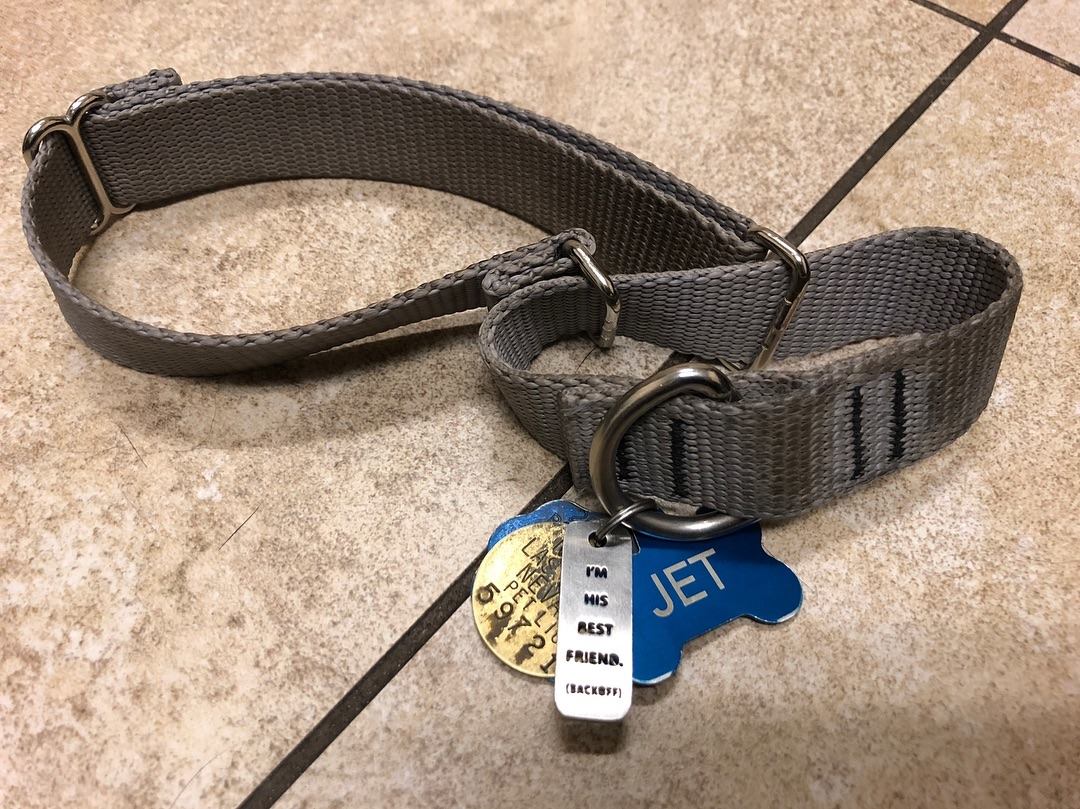
This is Jet

This is Jet

Jet’s owners brought him into their vet and told the front desk that they wanted to “donate” him.

When they were informed that “donating” a dog was not a thing they left. They returned five minutes later and said that they wanted to euthanize him. “He’s old, he pees in the house, and we are going on a trip and he can’t come,” was the reason that was given.

I was working “on the floor” at the time and I was vaguely aware of this interaction going on, and I asked one of the staff if the owners just wanted to surrender the dog to animal control so that he could go to the pound? We do get this request from time to time, and while we don’t like taking them, it is better than the pet being put to sleep.

The answer came back that yes, that was what they wanted to do. The handed over his leash, patted him on the head, said “goodbye puppy” and walked out the door.

Jet was brought back through the hospital and what I saw was a sad, confused, lost, and in poor shape twelve year old dog that nobody wanted.

It broke my heart.

I told the staff to get the reference number from animal control when they came to pickup. Two days later I went to the shelter and picked up Jet and took him home.

In cases like this we require that animal control take legal possession before any staff member, including me, adopts them.

Jet was in pretty poor shape. He was thin, his coat was coarse and in clumps. The photo above, unfortunately, does not really show how bad he looked. He got on fine with my other dogs, however, so he had a home. Initially, I thought that we might be putting him down in a few days due to ill health – I was pretty convinced he had diabetes. But I wanted to give him a chance.

His first night at my house, Jet did indeed pee in the house.

It was the first and only time he did this.

The next day I took him back to work and got him medically checked out. Much to my surprise, he received a clean bill of health.

Today, Jet looks a lot healthier and at times looks like the world’s happiest dog.

He eats well, regularly goes to an amazing dog park, sits on the couch to watch movies and, from time to time, sleeps on my bed.

He has his own instagram and goes on lots of adventures.

(Yes, that’s Jet and Jill Sobule)

I have no idea how long we have together, but there is not a day that goes by when I don’t think, not how lucky Jet is, but how lucky I am to have him in my life.

(This originally appeared on Quora in answer to: Have you ever adopted a pet from a shelter?)

Why Did No One Recognize C-3PO or R2-D2?

The real reason is because the prequels were not thought out well enough before the original Star Wars.

However, there a much more interesting reason that is cannon, and was brought up in the original Star Wars, now A New Hope, in most of the subsequent films, and is explicitly mentioned in Solo.

That Droids are slaves.

They are property, even though they give all outward appearances of being sentient and having feelings. They are brave, make sacrifices, and are to all appearances loyal.

They are discriminated against: “We don’t serve their kind in here.”

They are bought, sold, and held in chattels: “The restraining bolt has short circuited his play back mechanism, he suggests if you remove he may be able be playback the entire message.”

Our heroes, and our villains, all think of all droids in this manner.

They are treated worse than second class citizens. They are not friends. I would argue that they are treated worse than pets.

It is any wonder that Anakin, Obi-Wan, and Owen Lars don’t remember individual droids?

We treat them as comic relief and as interestesting characters, in universe, they are appliances.

(Originally posted on Quora in answer to: Why didn’t anyone like Obi Wan, the Lars family, or Darth Vader recognize C-3PO or R2-D2? )

Gun Addiction

I don’t like guns.

I’ve fired a number of them, found it fun, but although I have been tempted to purchase, I believe intellectually, however, that there is no reasonable justification for me having a firearm.

That my life is significantly more at risk by having a firearm in the house than without.

Interestingly, I have a friend,who is a recovering addict, who went shooting at a range a few months back.

She loved it.

Loved it a lot.

Really loved it a lot.

Loved it the way she used to love drugs.

The same feelings and emotions that she had from taking drugs, were replicated by firing weapons that can kill. The highs were different, but it was a high all the same. A high that she knew, as a former addict, she could easily get addicted to. That would serve the addictive centers of her brain.

Now I’m not saying that everyone who shoots, or owns guns, is addicted to them. But I do think it makes sense that addictive personalities can be attracted to gun ownership. The unwillingness to even consider debating reasonable controls on gun ownership, by a certain section of society, is more reminiscent of addictive behavior than any type of logical political argument.

This originally appeared on Quora in answer to: If you have no experience with firearms and thus fear them, are you willing to take an NRA certified course to learn about handguns, or rifles in order to familiarize yourself in a safe environment with a certified instructor? If not, why?

Impressing the Jaded

Not a movie set, but I worked on the theatrical version of the play M.Butterfly in London’s West End which starred Anthony Hopkins.

Hopkins was already a movie star in the UK and had been for years, but after he left M.Butterfly he went to Hollywood to work on a little picture called Silence Of The Lambs.

For about three months, almost every evening, I got see Anthony Hopkins deliver a power house of a performance. In particular, M.Butterfly ends with a soliloquy and transformation. Every night was different. Sometimes the differences were subtle, but often they were dramatic. Theatrical crews can be quite jaded, but pretty much everyone watched that finale soliloquy pretty much every night.

Nobody was surprised when about 18 months later Tony became an international superstar.

M.Butterfly is a difficult play. The movie, for example, does not really work. But Hopkins held an audience of 1,200 enthralled every night and a much smaller audence, who knew what the lines were, and knew what was coming, not just enthralled but reverential.

(This originally appeared on Quote as a reply to: Has anyone who has worked on a movie set ever been awe-struck by a particular actor’s ability?)

Obituary

David Ross Falconer was my father, and our relationship was a complicated one.

We defined our relationship by the disagreements that we had, about politics, science, history, movies, and whatever else we could find to argue about. These debates became the glue that held us together. There were no long-term consequences to these discussions – they were just how we felt at the time – as my dad would say, I’d argue black was white just for the sake of it. It is a skill I am particularly proud of.

If my father’s life had a theme, it was one of trying to constantly trying to better himself. Of being proud of his accomplishments and standing up for what he believed in – even when there were times when we all would have preferred him not to.

A joiner by trade, my father was a perfectionist in his craft and a throw back to earlier times. I remember him when helping me with improvements to my first house taking the same amount of time to adjust how a door closed as I took to build, varnish, and mount a set of shelves.

The door closed beautifully.

He was simply in a differently world when working with wood than I was with my clumsy and amateur attempts.

My Dad loved westerns and loved nothing better than to watch Clint Eastwood, John Wayne, or Gary Cooper ride around the old west – even when it was really Italy.
Mum has still never forgiven me for the John Wayne DVD box set that bought Dad a few Christmases ago.

For all of my life, Dad was working for the City of Aberdeen – first as a Joiner in the Parks and Recreation department and then as a counselor. And just like any good western, my father’s world was populated with heroes and villains and seen in black and white, even though as a person he was full of contradictions.

He strove to be an intellectual while being a working man. He was an outsider as a loner, not a social animal and he had few friends; but he connected with people that he could help. You just didn’t want to get cornered at a party by him.
There was no malice or pretension in my father just a drive to his life better and that of the people he felt responsible for.

His proudest achievement while working as a joiner was getting a pay raise for his fellow union members. Perhaps not the thing to say at a job interview for a big DIY chain store – but that was my dad.

My father went back to school, learned about economics, and taught himself how to invest all while cutting wood for a living and being a union organizer. He got himself involved in politics, particularly local politics, and joined the labor party. Ultimately, however, he was a Blairite when everyone else was concerned with Maggie Thatcher. Upon meeting Neil Kinnock, Dad complained to him that he had not moved against the far left soon enough – that was my dad; saying what he thought because it was how he felt at the time.

Local politics was where my dad felt most at home and really became the man he had always wanted to be. Elected as a labor councilor he developed a reputation with his constituents as someone who got things done.

There was a new sheriff in town.

Unfortunately, his relationship with the local labor party soured and he was deselected. My father did not make friends easily and I’m sure that ideological and intellectual purity rather than results from representation played a hand in what he felt was a betrayal.
But like the gunslingers he so admired my father just picked himself up, dusted himself off, got back on his horse… and joined the Liberal Democrats.

He may have lost his battle for reselection but won his war when he was elected for Holburn as a Liberal Democrat councilor with a majority of 35. It was as a councilor that he found his niche in life. It was the job he was the happiest in and it was the job he rode off into the sunset doing.

Dad worked incredibly hard to get elected and then incredibly hard as a councilor and, in some ways, to the detriment of his health.
Illness dogged my father’s later years and became a mirror image of his life. First, he had to deal with the physical illness and then latterly a mental one. For someone who spent the first part of his life active and working with his hands and then spent years finding ways to improve his mind and finally as a councilor being able to use that mind his illness was incredibly cruel.

Although I’m sure he thought of himself as a tradesman to the day he died, Dad always was looking to refashion himself and it was as a councilor that he succeeded. This was his gift to me, the ability to change gears, and reinvent oneself as circumstances dictated.
We might not always have seen eye to eye, or event been as close as either of us would have liked; but we loved each other, and I have a deep respect for his achievements and for the journey that his life led him on. My one regret that Dad was never able to visit my current home, less than half an hour from that Mecca of the old west: Tombstone.

Goodbye old cowboy – no more arguments, promise.